The idea of establishing VSSMGE was quite early after the peace was restored in Vietnam in 1954. A group of Vietnamese geotechnicians was formed in 1960, just a few years after the French War ended (1945-1954), when Vietnam was temporarily divided into the two regions: the North and the South. The group was called "Academic Group of Soil Mechanics and Foundations”. Immediately after the establishment of the group, the first Northern Vietnam Conference on Soil Mechanics and Foundation Engineering was held at the end of 1962. Six years later, in 1968, the second conference was organised, in the American War, which was spread to the North with air raids since 1965, and ended in 1972. The Vietnam Society for Soil Mechanics & Geotechnical Engineering (VSSMGE) was officially established in 25/12/1984. Under the country law, the society congress can be held every 5 years and the presidents can be reelected.

A pioneer in using cement as a binder for soil stabilization

A pioneer in using cement as a binder for soil stabilization
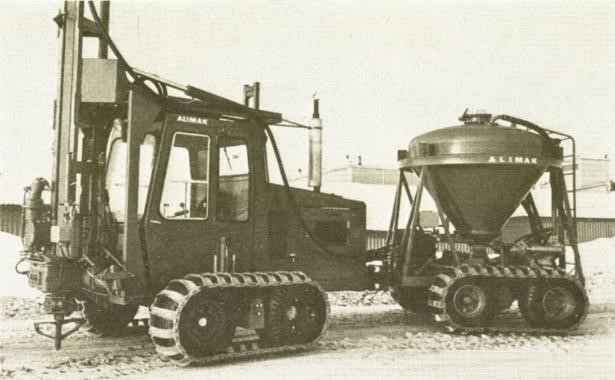

Figure 1. The Linden-Alimax LPS-3 machine imported to Vietnam in the SIDA aid program from Sweden in 1979


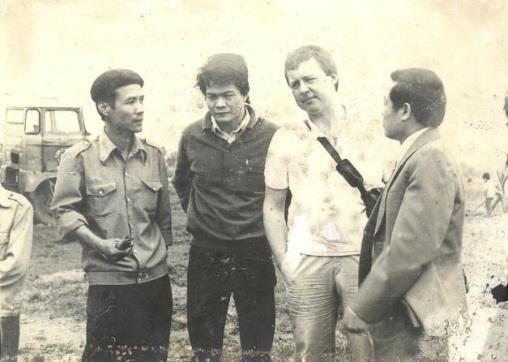
Figure 2. Dr. Bredenberg visited a construction site in Vietnam in 1981

The concept of using dry quick lime for deep soil mixing was presented first in Sweden around 1967. The idea of injecting quick lime into soil to form a vertical column was innovated by Mr. Kjeld Paus, who worked several years as a road engineer and he used quick lime for surface soil stabilization. At the Swedish Geotechnical Institute (SGI), research was carried out in many years in order to find a chemical stabilization method to stabilizing soft marine clays of the Scadinavian type. Around 1976, Prof. Bengt Broms started further research at the Royal Institute of Technology (KTH) to complete the method, so called the lime column method (LC method).

In 1979, in the aid program of SIDA, SAREC of Sweden, IBST of Vietnam (Institute of Construction Science and Technology) was fortunate to be selected to cooperate with SGI. Two soft soil stabilization technologies invented by Sweden were selected to be transferred to Vietnam: the lime column and vertical band drain method.

In 1980, two construction equipment for the lime column and vertical band drain methods were imported into Vietnam. Along with that, two leading Swedish professors, Bengt Broms, an expert in the lime column method, and Sven Hansbo, the father of vertical band drain method, travelled to Hanoi to Vietnam in 1979 and 1980, respectively to introduce these technologies into Vietnam.

In the beginning, everyone believed that the LC method would be most suitable to Vietnam, because lime is a common local material. After quite a short time, it turned out that it is not. Dry quick lime is very difficult to be preserved in a humid condition as in Vietnam. This problem appeared to make Vietnam a pioneer in using cement instead of lime. IBST informed SGI of its decision to use cement as an alternative to lime, and the studies on samples with cement mixed with soil were conducted. The determination of the strength and deformation properties for different combinations of soil and cement mix were intensively performed in laboratory.

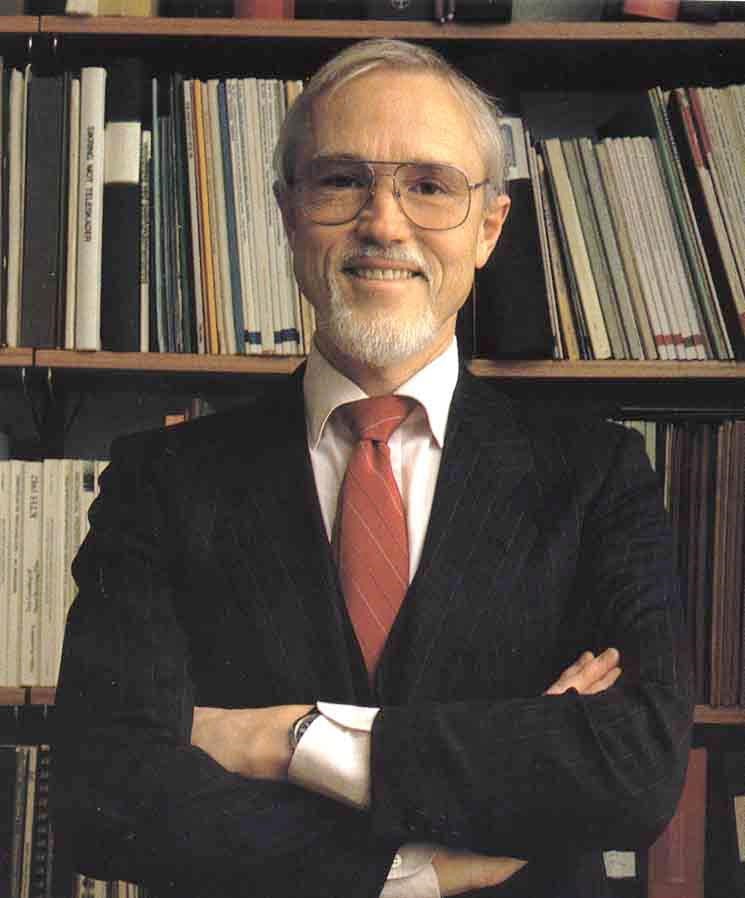
In the international conference on “Dry Mix Methods for Deep Soil Stabilization”, Stockholm (1999), in his “Keynote lecture: Equipment for deep soil mixing with the dry jet mix method”, Dr. Håkan Bredenberg, the chairman of the conference organizing committee, emphasized that: “Experience from Vietnam demonstrated that mixing lime with cement could improve the effectiveness”, see page 324 of the conference proceedings. Although this is not entirely true as in the studies at IBST, only cement was used as a binder, without lime. Using a 50/50 mix of quick lime and standard cement became rapidly the standard binder and Lime Cement Columns (LCC method) was named for the method. This method is still very common in Scandinavia. Today, quick lime only is almost never used in Scandinavia. Many time more cement than lime is used, for example in a 25/75% lime/cement is common for many organic soils.

IBST study results are still saved at the SGI Library. In 1982, during his 4-month visiting study at SGI, engineer Nguyen Manh Dau wrote a report “Some results from laboratory investigation on soil-lime mixture", in which cement was studied as a binder. Six reports that Mr. Dau and his colleagues wrote in the SGI-IBST cooperation program, from 1982 to 1999, can be found at the SGI Library. Dr. Bredenberg was also a participant in the SGI-IBST cooperation program, and has traveled to Vietnam many times (Figure 2). He reorganized the contribution of the Vietnamese colleagues, and emphasized this in his keynote lecture.

REFERENCES

Bredenberg, H. (1999) Keynote lecture: Equipment for deep soil mixing with the dry jet mix method. Proc. Int. Conf. Dry Mix Methods for Deep Soil Stabilization, Stockholm, pp. 323-331.

Nguyen Manh Dau (1982) Some results from laboratory investigations on soil-lime mixture. SGI Varia 108, 35p.

Vietnamese Geotechnical Day

Vietnamese Geotechnical Day 2010


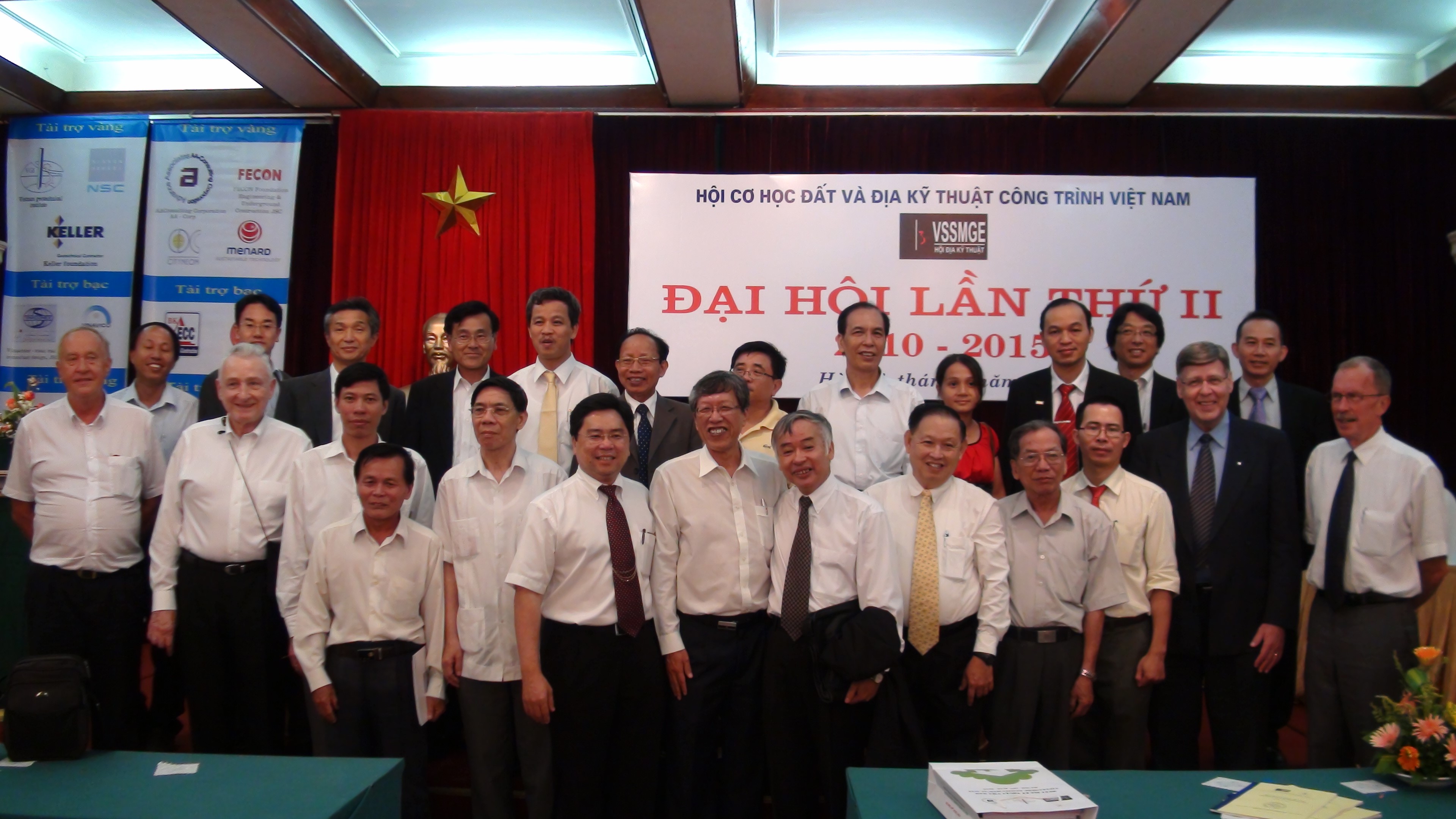
Figure 1. VSSMGE new executive board with senior members


Figure 2. Local and foreign lecturers at the conference

A national geotechnical conference, which was called “Vietnamese Geotechnical Day”, was held on 18th June 2010 in Hanoi to commemorate the 30th Anniversary of VSSMGE and the 15th Anniversary of Vietnamese Geotechnical Institute (VGI). The event was attended by more than 250 participants including delegations from Sweden, Canada, USA, Cuba, Japan, South Korea, Taiwan, Malaysia and Singapore.

The conference started with opening address by Prof. Dr. Nguyen Manh Kiem on “50 years of Geotechnical Engineering in Vietnam” followed by congratulatory message to VSSMGE and VGI by Prof. Delwyn G. Fredlund (Canada). A letter of congratulation to the conference from Prof. Sven Hansbo (Sweden) was also read out by Dr. Phung Duc Long. A comprehensive review on “30 years of Co-operation between Vietnam and Sweden and other countries in Geotechnical Engineering, Geo-engineering and Construction Technology” was presented by Dr. Bo Berggren (Sweden) and Prof. Nguyen Truong Tien.

The technical program for the day consisted of 5 keynote lectures and 16 lectures given by local and foreign speakers. The keynote lectures are: Keynote lecture 1 by Prof. Akira Asaoka (Japan) – “All Soils, All States, All Round Geo-analysis Integration”; Keynote lecture 2 by Prof. Delwyn Fredlund (Canada) – “Assessment of Moisture Flux Boundary Conditions for Near-ground Surface Geotechnical Engineering Problems”. Keynote lecture 3 by Datuk Hong Lee Pee (Malaysia) – “Pile Talk”. Keynote lecture 4 by Ir. Kenny Yee and Dr. Ooi Teik Aun (Malaysia) – “Ground Improvement: Innovation and Sustainability”. And Keynote lecture 5 by Dr. Nat Fox (USA) – “Lime-soil Stabilization for Road Construction in Mekong Delta River”.

After the technical sessions VSSMGE held their internal congress meeting, which was attended by more than 100 members, represented for geotechnicians in the country. At the meeting, Prof. Nguyen Truong Tien was re-elected as the President of VSSMGE. Prof. Le Duc Thang and Dr. Phung Duc Long were elected as the Vice-Presidents of VSSMGE. The Secretary-General is Dr. Nguyen Cong Giang. The Vietnamese Geotechnical Club (VGB) was also inaugurated this day and the president of the club is Prof. Le Duc Thang. With a new young executive board of 24 members, VSSMGE are ready for new activities and challanging tasks in geotechnical field in Vietnam.

The event was closed with a cultural show and dinner in the evening ended at 9.45 pm. The theme for the evening was “To know and understand the Sounds and Souls of our Mother Land”. The Vietnamese Geotechnical Day was considered by all participants as one of the most successful geotechnical events ever in Vietnam.

GEOTEC HANOI 2011

International Conference GEOTEC HANOI 2011 "Geotechics for Sustainable Development", in Hanoi, 6th-7th October 2011.


Figure 1. A memorable picture: conference organisers and special guests


Figure 2. Dr. Phung Duc Long, VSSMGE vice-president and chairman of conference scientific committee, opened the conference

Geotec Hanoi 2011 - "Geotechics for Sustainable Development", an international conference was organised by FECON Foundation Engineering & Underground Construction JSC, one of the leading geotechnical contractors in Vietnam, in cooperation with Vietnamese Society for Soil Mechanics and Geotechnical Engineering (VSSMGE), and with Civil Engineering-Mechanics-Material Association, France, in Hanoi during two days 6th and 7th October 2011. The conference has attracted 450 attendees from 24 countries. At the conference 110 papers were published, among which 60 papers/lectures were presented.

The conference has six main themes: 1) Soft soil improvement and reinforcement, 2) Foundation Engineering, 3) Tunneling and Underground spaces, 4) Environmental Geotechnics and Sustainable development, 5) Geotechnical modeling, design and monitoring, and 6) Geotechnical case histories. The six sessions were held parallel in the two conference halls.

Among the conference high-lights were the six keynote lectures given by six well-known geotechnical experts in the world:

•Keynote lecture 1: "Soil improvement by preloading and vertical drainage" given by Professor Sven Hansbo (Sweden);

•Keynote lecture 2: "The design of high-rise building foundations" given by Professor Harry Poulos (Australia);

•Keynote lecture 3: "Tunneling in soft ground and urban environment" given by Professor Alain Guilloux (France);

•Keynote lecture 4: "Current Facts Concerning Efforts to Improve the Global Environment and Commitments by the Construction Industry in Japan" given by Dr. Hiroshi Yoshida (Japan);

•Keynote lecture 5: "New horizons in numerical analysis for geotechnical engineering" given by Professor Pieter Vermeer (the Netherlands);

•Keynote lecture 6: "Characteristics of Liquefaction-Induced Damage in the 2011 Great East Japan Earthquake" given by Professor Kenji Ishihara (Japan).

The proceeding

The proceeding, which has an international registration nunmber ISBN 978 604 82 000 8, was very well edited with international high-quality printing and hard cover. The proceeding consists of 996 pages and includes 110 papers, all written in English, which were divided in to six sessions. A CD Rom is also provided, including all the papers in pdf files with color figures/photos. The proceeding can be ordered through the conference website.

GEOTEC HANOI 2013

2th International Conference GEOTEC HANOI 2013, on Geotechnics for Sustainable Development, in Hanoi, 28 – 29 November 2013.


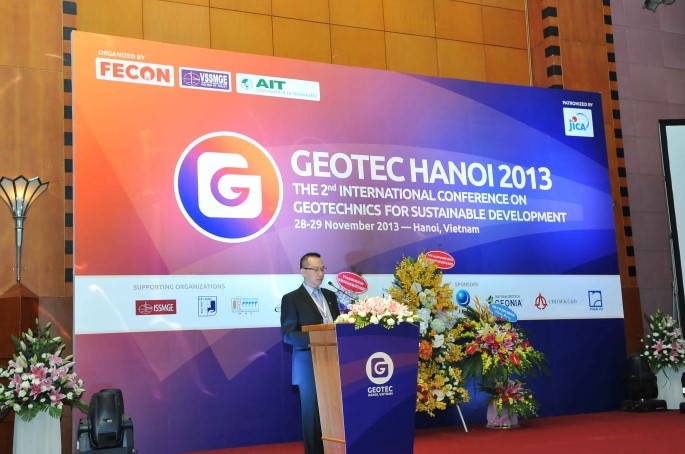
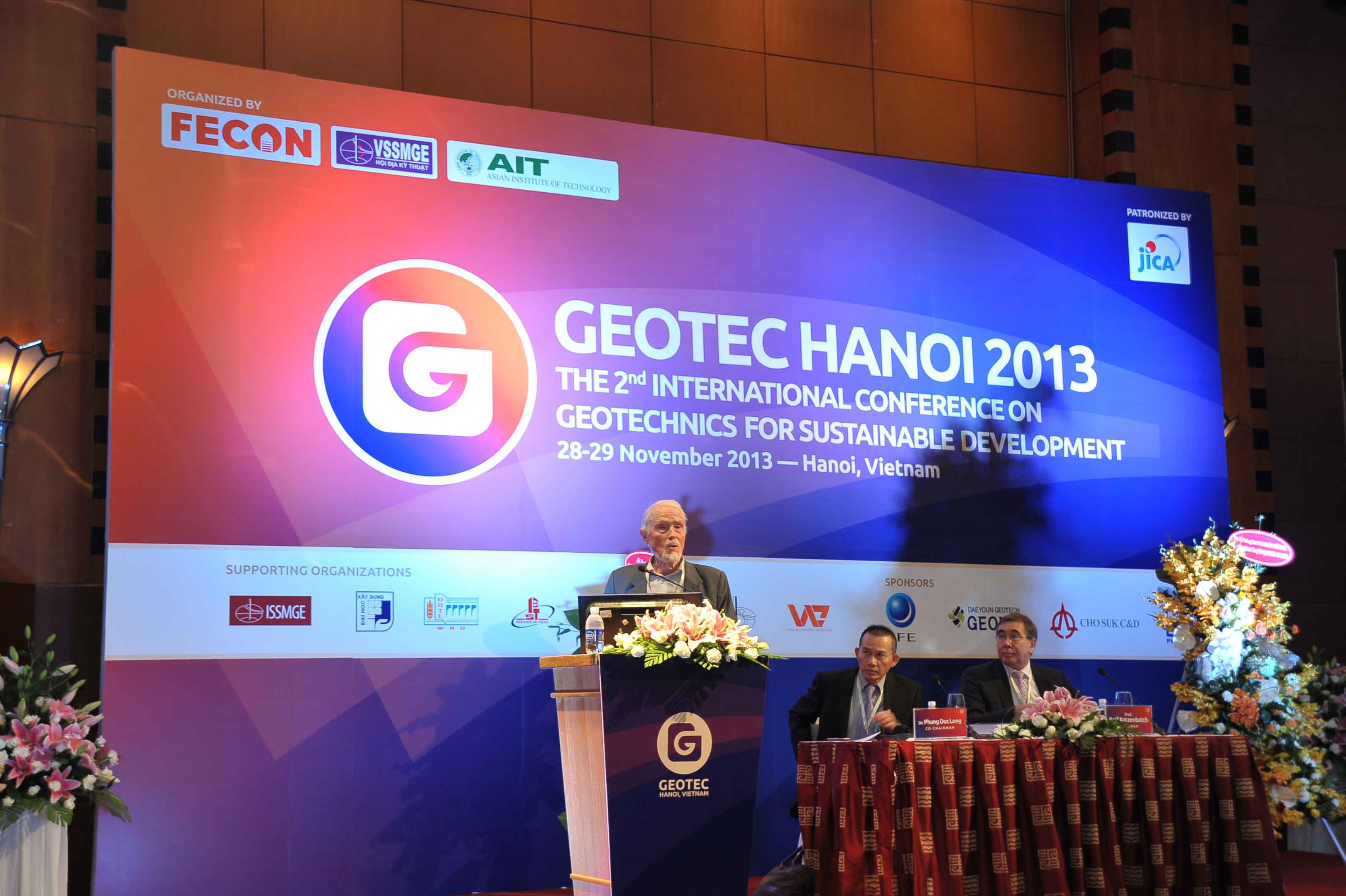
Figure 1. Dr. Phung Duc Long, VSSMGE vice-president and chairman of conference scientific committee, opened the conference


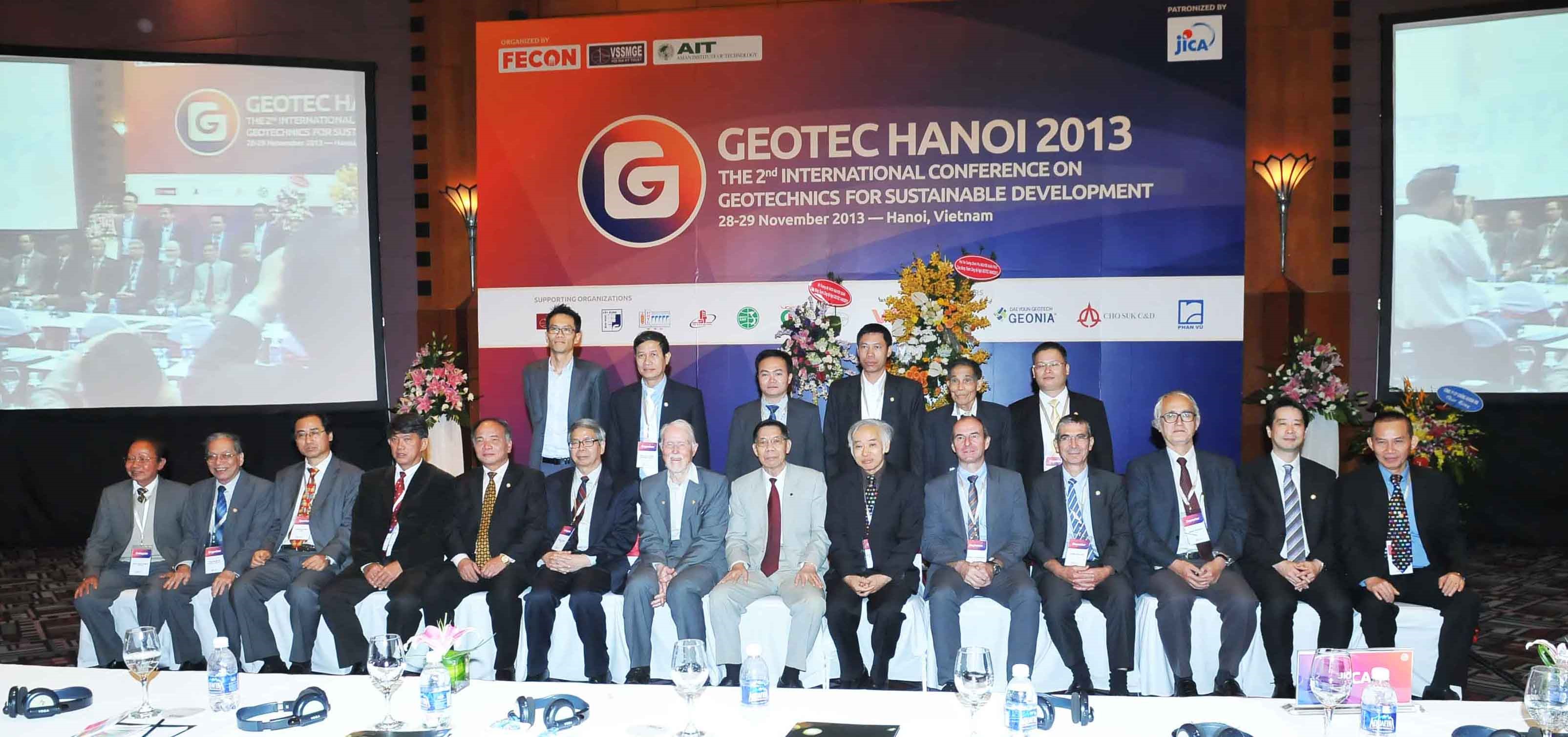
Figure 2. Conference’s key persons

GEOTEC HANOI 2013 was successfully organized on 28-29 November 2013 in Hanoi, with more than 500 attendees from 28 countries. The conference proceeding consists of 112 papers, of which 84 were presentated.

Two years ago, the first international conference GEOTEC HANOI 2011 with the theme “Geotechnics for Sustainable Development” was. The conference’s main purpose was to provide a forum to interchange ideas, experience, and knowledge in the interest areas. Continuing from the success of the first event, the conference was decided to be held every second year in Hanoi.

Hosting the conference are FECON Foundation Engineering & Underground Construction JSC, a leading geotechnical contractor in Vietnam, and Vietnamese Society for Soil Mechanics and Geotechnical Engineering (VSSMGE), with an invited international co-organizer, Asian Institute of Technology (AIT) from Thailand. The ambition of the organizers is to establish an international conference every second year in Vietnam, which can attract the leading experts both from Vietnam and around the world in the geotechnical areas that have been or will be developed in Vietnam. The event is also aimed to help Vietnamese experts, engineers and contractors actively taking part in the sustainable development of the infrastructure in particular, and of the economy in general in Vietnam.

Five technical sessions: 1) Foundations for high-rise buildings.

2) Underground projects in soft soil.

3) Soil improvement and reinforcement for infrastructure projects.

4) Monitoring and instrumentation for tunnels and excavations.

5) Geotechnical modeling and numerical analysis.

The conference honored a giant figure in the geotechnical world, Prof. Sven Hansbo from Sweden, with his Honorable lecture “Deep compaction by heavy tamping, deep vibration and blasting”. Since 1979, Professor Hansbo has enormously devoted to the development of geotechnics in Vietnam. His name is also attached to the success of the cooperation between Vietnam and Sweden in the geotechnical field.

Five keynote lectures at five technical sessions:

1) “Geotechnical challenges at super high-rise buildings”, Prof. Rolf Katzenbach (Germany);

2) “Management of settlements for an urban tunnel (Toulon, France)”, Prof. Alain Guilloux (France);

3) “Recent geosynthetic-reinforced soil structures for railways in Japan”, Prof. Fumio Tatsuoka (Japan);

4) “Smart Geo-Infrastructure - Opportunities for new sensor monitoring systems”, Prof. Kenichi Soga (UK);

5) “Examples for successful 3D finite element analysis in geotechnical engineering”, Prof. Helmut Schweiger (Austria).

The proceeding The proceeding, with international registration number ISBN 978 604 82 0013 8, is very well-edited with international high-quality printing and hard cover. The proceeding consists of approximately 950 pages and includes 112 papers in English. A CD Rom is also provided with all the papers in pdf files. The proceeding can be ordered through the conference website at here, or to mail the conference secretarial mail address secretariat@geotechn2013.vn.

Numerical Analysis in Geotechnics 2015

NAG2015 International Seminar, 20 August 2015, Hanoi, Vietnam : Numerical Analysis in Geotechnics.


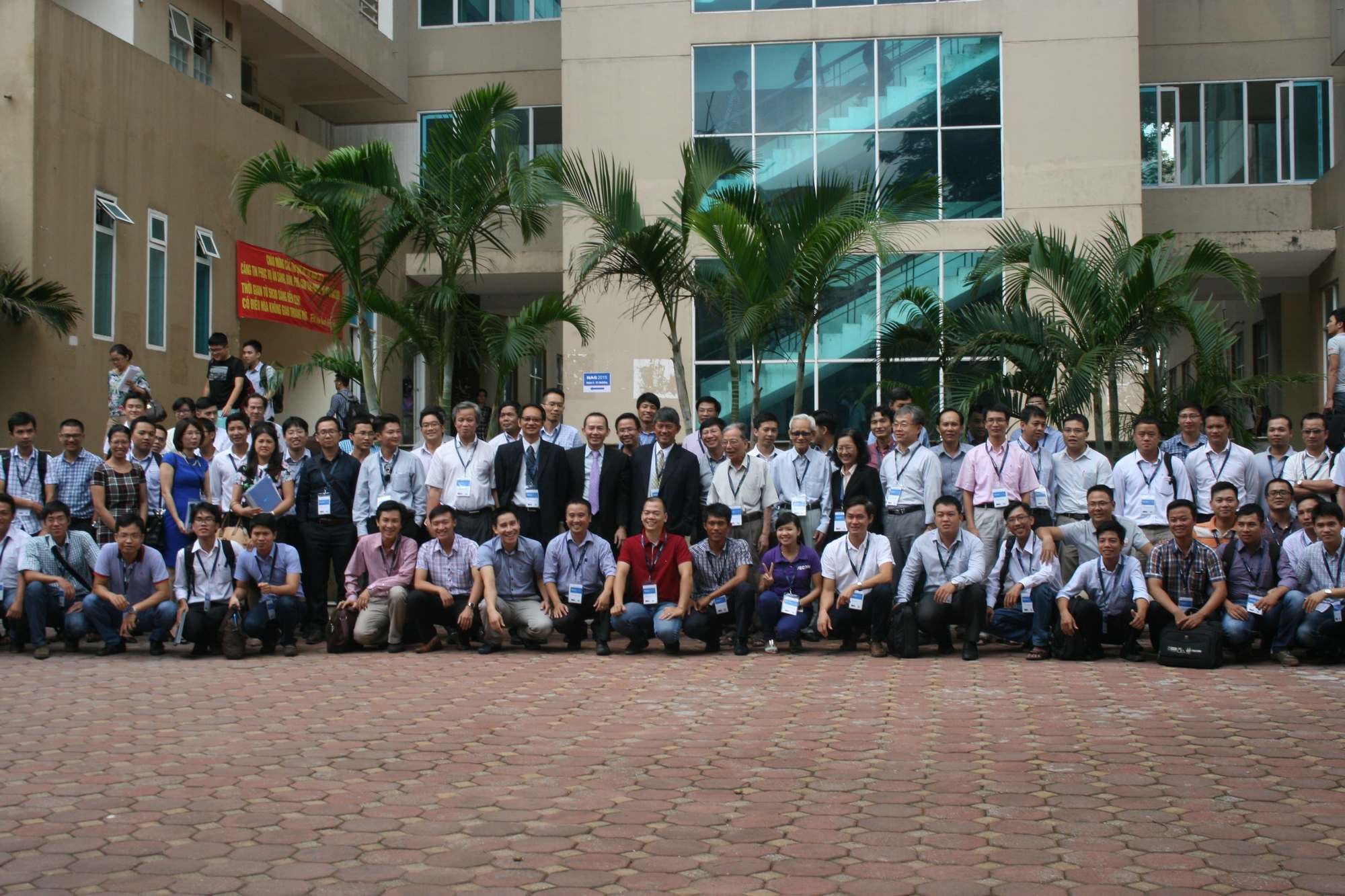
Figure 1. NAG2015 attendees


Figure 2. NAG2015 Some of the key persons

The Vietnamese Society for Soil Mechanics and Geotechnical Engineering (VSSMGE) and the Thuyloi University (TLU) organized the one-day seminar on Numerical Analysis in Geotechnics (NAG2015), on 20th August 2015, in Hanoi. This seminar was planned to be held every second year in Vietnam. The first event, NAG2015 created a forum, where the users of different numerical methods/computer codes can exchange their experience and knowledge relating to the use of numerical methods in geotechnical engineering, including engineering applications and scientific achievements. NAG2015 was a great success with more than 120 attendees from seven countries and territories, including Singapore, Thailand, Taiwan, Canada, France, China and Vietnam. The organizers aimed to make the seminar a regular regional event, attracting the scientists in geotechnical numerical applications.

In NAG2015, the following papers were presented: • "Effect of the raft-pile foundation of transmission tower on the design of adjacent shoring structure" by Prof. John Curran, Dr. Kien Dang, and Dr. Thamer Yacoub, (Rocscience, Canada)

• "Modelling of Embankments, Reclamation and Improved Ground by Vacuum Consolidation" by Dr. William Cheang (Plaxis AsiaPac, Singapore)

• "Numerical modelling of cyclic behavior of a dyke project under seismic and waves actions", by Dr. Nguyen Khoa Van & Prof. Alain Guilloux (Terrasol, France)

• "A FEM code of groundwater and land subsidence analysis for an expanding city", by Dr. Pham Huy Giao (AIT, Thailand)

• "Deep excavations and tunneling works of MRT in Taiwan and Indonesia" by Prof. Benson Hsiung (CECI, Taiwan) & Dao Sy Dao, Kuan-Hun Lin (Tung Feng Construction Engineering Vietnam Co.)

• "3D modelling of piled raft and piled foundations" by Dr. Phung Duc Long (VSSMGE, Vietnam)

• "3D Modelling of Pile Responses to Shield Tunnelling" by Dr. Phien-wej Noppadol, M.Eng. Mohammad Shakeel (AIT, Thailand) & Dr. William Cheang (Plaxis AsiaPac, Singapore)

• “The Effect of Element Type to Use the Boundary Condition And Result of a Model in Analysis the Blast Vibration during Excavation Tunnel in Urban Area” by Van Kien DANG (Hanoi university of mining and geology, HUMG, Vietnam)

• “Apply a New Blast Damage Criteria for analysis Blast Vibration during Tunnel Excavation by Blasting Method” by Dang Van Kien (Hanoi university of mining & geology, HUMG, Vietnam)

• “Effects of the depth and thickness of the diaphragm wall on the stability of deep excavations in clay” by Dr. Do Tuan Nghia and Prof. Chang-Yu Ou (National Taiwan University of Science and Technology, Taiwan)

• “Modelling an Geofoam Embankment Behind Bridge Abutment using MIDAS Soilworks”, by Do Huu Dao & Le Dinh Viet (University of Science & Technology, Univ. of Da Nang, Vietnam)

• “Physical model test and numerical modeling on the progressive failure of unsupported tunnel”, by Dr. Vu Ba Thao (Hydraulic Construction Inst., Vietnam), Dr. Dinh T.H. Minh, Prof. Zhu Hehua, Prof. Xu Qianwei (Tongji Univ., Shanghai, China)

• “Consolidation analysis of Vietnam soft marine clay by finite difference method with application of constant rate of strain consolidation test”, by Nguyen Cong Oanh & Tran Thi Thanh (SIWRR and Posco Engineering Co. Ltd, Ho Chi Minh, Vietnam)

• “Modified elastic foundation beam model for retaining structure of deep excavation”, by Pham Van Minh, Vu Ba Thao, Nguyen Quoc Dung (Hydraulic Construction Institute, Vietnam Academy for Water Resources, Vietnam)

GEOTEC HANOI 2016

3rd International Conference GEOTEC HANOI 2016, on Geotechnics for Sustainable Infrastructure Development, in Hanoi, 24 – 25 November 2016.


Figure 1. Dr. Phung Duc Long, VSSMGE vice-president and chairman of conference scientific committee, opened the conference


Figure 2. Conference’s key persons

GEOTEC HANOI 2016 was successfully organized on 24-25 November 2016 in Hanoi, with 600 attendees, of which 235 international, from 31 countries. The conference proceeding consists of 145 papers. 88 were presented in two parallel conference halls. The First and Second GEOTEC HANOI conferences were successfully organized in 2011 and 2013. The conference’s main purpose was to provide a forum to interchange ideas, experience, and knowledge in the interest areas. Continuing from the success of the two previous event, the conference was decided to be held every third year in Hanoi. Hosting the Third Conference are FECON Corporation, a leading geotechnical/infrastructure contractor in Vietnam and the Vietnamese Society for Soil Mechanics and Geotechnical Engineering (VSSMGE). We are grateful for the Japanese Geotechnical Society (JGS) having accepted to serve as international co-organizer.

This year conference is held in a context of Vietnam experiencing the strongest development period ever. During the last five years, since the 2011 conference, numerous new large infrastructure projects have been constructed in Vietnam. Thousand kilometers of highway has been built. Construction of the first metro lines in Vietnam has been started in Hanoi and Ho Chi Minh City. Vietnam is one of the countries most impacted by climate change; our country is threatened by flooding and soil salinity, which problems call for geotechnical expertise. The conference organisers believe that much experience and knowledge will be shared and learnt in the five conference technical sessions:

1) Deep Foundations,

2) Underground Construction and Tunneling,

3) Ground Improvement for Infrastructure Projects,

4) Coastal Geotechnics for Climate Change, and

5) Monitoring, Inspection and Maintenance.

Five keynote lectures were given by five speakers from four continents:

1) “The Unified Design of Piled Foundations”, Prof. Bengt Fellenius (Canada);

2) “Evaluation of different measures in reducing movements induced by deep excavation”, Prof. Chang-Yu Ou (Taiwan)

3) “Drains and Vacuum for Soft Soil Stabilization – Recent Advances in Experimental and Numerical Modelling”, Prof. Buddhima Indraratna (Australia);

4) “Geotechnical response to natural disasters in the context of climate change”, Prof. Kazuya Yasuhara (Japan);

5) “Ground and structural response to tunneling – lessons learnt from three major projects in London”, Dr. Jamie Standing (United Kingdom).

GEOTEC HANOI 2016 instigates a special honor lecture named Sven Hansbo Lecture. Professor Hansbo, a giant figure in the geotechnical world, has contributed significantly to the development of geotechnics in Vietnam by direct advice, by taking Vietnamese students into his teaching programme in Sweden, and by his contributions to the first two conferences. A respectful Hansbo Lecture ceremony was made, in which Prof. Hansbo talked remotely from Sweden, with the conference audience. The First Sven Hansbo Lecture was presented by Prof. Bengt Fellenius.

The proceeding The proceeding, with international registration number ISBN 978 604 82 1821 8, is very well-edited with international high-quality printing and hard-covered. The proceeding consists of approximately 1200 pages and includes 145 papers in English. A CD Rom is also provided with all the papers in colored pdf files. The proceeding can be ordered through the conference website at here, or to mail the conference secretarial mail address secretariat@geotechn2013.vn.

Prof. Hanbos Lecture in GEOTEC 2016

The Hansbo Lecture in Geotec Hanoi Conference Series.


Figure 1. Prof. Sven Hansbo


Figure 2. Prof. Sven Hansbo at Geotec Hanoi 2013 conference, November 2013

Geotec Hanoi has become a favorable international geotechnical conference, which is held every 2 or 3 years in Hanoi, Vietnam. After the success of the two first events, in 2011 and 2013, the third conference Geotec Hanoi 2016 will be organized on the 24th – 25th November this year. In this conference, the first Sven Hansbo Lecture will be presented by Prof. Bengt H. Fellenius and the topic is “The Unified Design of Piled Foundations”.

Sven Gunnar Hansbo was born in Sweden on the 29th December 1924. He completed his MSc. in 1949 and his Ph.D in 1960 at Chalmers University of Technology, Gothenburg, Sweden. 1964–1990 he was professor at the De-partment of Geotechnical Engineering, Chalmers University of Technology. Among other positions: 1974–1982: President of the Swedish Geotechnical Society; 1982–1985: President of the Swedish Society of Civil Engineers; 1981: Chairman of 10th ICSMFE in Stockholm.

Prof. Hansbo has published more than 100 papers in Scientific Conference Proceedings and Journals, State-of-the-Art Reports, General Reports, Keynote Lectures, etc. His 1960 Ph.D. thesis "Consolidation of clay with special reference to influence of vertical sand drains" is still a major reference for those working with vertical drains to accelerate consolidation of clays. He has written some textbooks on topics ranging from consolidation of clay, soil improvement, and foundation response, as

• Soil Material Science, 218 pp. (AWE/GEBERS),

• Foundation Engineering, 519 pp. (ELSEVIER, Developments in Geotechnical Engineeing, 75)

• Fundamentals of Geotechnology, 173 pp. (Geotechnical e-Books on Geoforum.com)

• Ground Improvement, 139 pp. (Geotechnical e-Books on Geoforum.com).

Prof. Hansbo has contributed much to the development of soil mechanics and geotechnical engineering in Vietnam through his many visits since in 1979, when he first came to our country, by presenting guest lectures and participating in conferences, and, not least, by taking on many Vietnamese students and doctoral students. In order to recognize Dr. Hansbo's contributions to Vietnam, the Geotec Hanoi Conference Organizing Committee has decided to instigate a special lecture in his honor addressing either Soil Improvement or Deep Foundations, starting from the this Third Geotec Hanoi 2016 Confernece.

Awards

1973 Price of honour Stockholm Building Society: “A new approach to development of the compensa-tion method applied in foundation on friction piles”

1974 Swedish Geotechnical Society: Price of honour

1986 The Golden Award of Merits of the Academic Senate of the Warsaw Agricultural University

1995 Polytechnica Gdanska: Medal for promoting the scientific cooperation between Chalmers Univ. of technology and Polytechnica Gdanska

2009 ISSMGE: Kevin Nash Gold Medal

Numerical Analysis in Geotechnics 2018

2ND INTERNATIONAL SEMINAR NAG2018 NUMERICAL ANALYSIS IN GEOTECHNICS 22 March 2018, Ho Chi Minh City, Vietnam


Figure 1. NAG2018 attendees


Figure 2. Opening speech by Dr. Phung Duc Long, VSSMGE President

The Vietnamese Society for Soil Mechanics and Geotechnical Engineering (VSSMGE), the Ho Chi Minh City University of Technology (HCMUT) and the National Taiwan University of Science and Technology (NTUST) organized the second international seminar on Numerical Analysis in Geotechnics (NAG2018), on 22nd March 2018, in Ho Chi Minh City. A half-day site visit to HCMC Urban Railway Construction Project – Line 1 (Ben Thanh-Suoi Tien Section) was held on the day after the seminar, 23rd March 2017. This is the second time the international seminar NAG is organized in Vietnam. The first event NAG2015 was held on 20 August 2015 in Hanoi, with 135 attendees from seven countries and territories, including Singapore, Thailand, Taiwan, Canada, France, China and Vietnam.

This second seminar NAG2018 was again a great success with more than 120 attendees and authors from seventeen countries and territories, including Taiwan, Germany, Korea, Japan, Russia, India, Nepal, Gambia, Singapore, Korea, Hong Kong, Malaysia, Indonesia, Thailand, United Kingdom, China and Vietnam. NAG2018 created a forum, where the users of different numerical methods/computer codes can exchange their experience and knowledge relating to the use of numerical methods in geotechnical engineering, including engineering applications and scientific achievements.

In NAG2018, the following papers were presented:

1. Rolf Katzenbach & Steffen Leppla (Germany). The important role of powerful numerical tools for highly qualified sustainable construction in geotechnical engineering.

2. Chang-Yu Ou (Taiwan). Application of numerical methods in the design of deep excavation.

3. JaeSeok Yang (Korea) & Joseph Stuart Birnie (UK). Numerical analysis of the shaft excavation a nd the effects on adjacent structures.

4. William Cheang (Singapore) & Phung Duc Long (Vietnam). Geotechnical analysis of soft soil foundations improved by PVDs and vacuum preloading.

5. Tsai, Yuan-Yao et al. (Taiwan). Sophisticated soil sampling, finite element geotechnical analysis and nonlinear seismic design for underground structures in Jakarta MRT Project.

6. Phung Duc Long (Vietnam). Settlement analysis for piled raft foundations - A case study 7. Tran Viet Thai & Huynh Quoc Vu (Vietnam). Back analysis of a deep excavation in the new alluvial sediment layer in Ho Chi Minh City.

8. Takeshi Satoh (Japan). The analytical prediction by FEM and the observational procedure for the reclamation work at log pond adjacent to facilities.

9. Syiril Erwin & Chang-Yu Ou (Taiwan). Study of Taipei MRT tunnel deformations due to adjacent excavation in 3D analysis.

10. Alvin K M Lam (Hong Kong). An engineering solution for a hillside development in Hong Kong. 11. Tomoya Tominaga et al. (Japan). Verification of reduction factor of sectional properties of steel sheet pile due to lack of interlock integrity.

12. Phan Tran Thanh Truc (Vietnam) & Takenori Hino (Japan). Valuate the effect of embankment height and pile spacing to the behavior of the geosynthetic - reinforced piled embankment using FEM.

13. Nguyen Thi Yen et al. (Vietnam). Deep excavation design – A case study in Hanoi Urban Railway.

14. Amadou Jallow et al. (Taiwan). Analysis of creep and consolidation settlement induced by EPB shield tunneling.

15. Pham Huy Giao (Thailand). Numerical analysis of Mekong delta land subsidence and possible different views between geotechnical engineers and journalists on this matter.

16. Le Ba Vinh et al. (Vietnam). Study on the settlement of raft foundations by different methods.

17. Kazuhiro Kaneda et al. (Japan). Study of vertical bearing capacity of spread foundation using rigid plastic finite element method.

18. Nguyen Thuy Mai Khanh (Hong Kong). Numerical analysis - What does the future hold?

19. Alieu Jagne & An-Jui Li (Taiwan). Investigations of slurry supported trench stability under seismic conditions.

20. Sun Yue (Japan). Study on numerical analysis method of slope deformation due to rainfall.

21. Alan Lolaev et al. (Russia). Application of numerical methods for the optimization of the technological parameters of the tailing dam alluvium in permafrost region.

22. Phan Dung & Nguyen Van Duyet (Vietnam). Nonlinear analysis of single pile under axial and lateral loading using p-delta curve by transfer matrix method.

23. Akash Gupta et al. (India). Model experiments and numerical modeling of interference effect of square footings on geocell reinforced sand beds.

24. Duong Hong Tham (Vietnam). A suggested numerical solution for non-linear consolidation settlement using second - order Runga – Kutta algorithm.

25. Park Sung-Sik et al. (Korea). A coupled Eulerian-Lagrangian approach for large deformation of soils.

26. C.B. Qin & S.C. Chian (Singapore). Kinematic analysis of seismic slope stability using discretisation technique.

27. Hua Thanh Than et al. (Vietnam). Effection of liquefaction by earthquake due to pore water pressure in sand.

28. S.C. Chian et al. (Singapore). Modelling of ground settlement using photogrammetry.

GEOTEC HANOI 2019

4th International Conference GEOTEC HANOI 2019, on Geotechnics for Sustainable Infrastructure Development, in Hanoi, 28-29 November 2019.


Figure 1. Dr. Phung Duc Long, VSSMGE President, co-chairman of the conference, made the welcome speech


Figure 2. ISSMGE President handed gifts to VSSMGE key persons

GEOTEC HANOI 2019 (GH2019) was successfully organized at the National Convention Center, in Hanoi on 28-29 November 2019. With more than 800 attendees, from 40 countries, it is one of the biggest technical conferences so far in Vietnam. The conference proceeding consists of 187 papers, in which 168 were presented in three parallel conference halls.

Since 2011, the series of GEOTEC HANOI conferences has been organised by FECON, a leading geotechnical/infrastructure contractor in Vietnam, and the Vietnamese Society for Soil Mechanics and Geotechnical Engineering (VSSMGE), under the auspices of the International Society for Soil Mechanics and Geotechnical Engineering (ISSMGE) and the Japan International Cooperation Agency (JICA). This year event has two other co-organisers, Thuyloi University (TLU), and Kokusai Kogyo Co., Ltd (KKC). GEOTEC HANOI 2019 is the 4th event of this conference series. Previous events were GH2011, GH2013, and GH2016.

Vietnam’s development over the past ten years has been remarkable. The total infrastructure investment has been sustained at 10 percent of GDP over an extended period of time. This has resulted in a rapid expansion of infrastructure stocks and improved access. Numerous large infrastructure projects have been constructed. The first metro lines in big cities are already started. Many large-scale railway, seaport and airport projects are being planned. The sustainability of the infrastructure, especially the issues related to geohazards & climate change causing subsidence, landslide and flood is always a major problem to be focused on. In order to help our countries, we believe that much experience and knowledge can be shared and learnt in the six conference technical sessions:

1) Deep Foundations,

2) Tunnelling and Underground Spaces,

3) Ground Improvement,

4) Landslide and Erosion,

5) Geotechnical Modelling and Monitoring,

6) Coastal Foundation Engineering.

This year, the keynote lectures are presented by Prof. Harry Poulos (Australia), Prof. Adam Bezuijen (Belgium), Prof. Delwyn Fredlund (Canada), Prof. Lidija Zdravkovic (UK), Prof. Masaki Kitazume (Japan), and Prof. Mark Randolph (Australia). We also have four invited lectures given by Prof. Charles Ng, ISSMGE President, Prof. Eun Chul Shin, ISSMGE Vice-President for Asia, Prof. Norikazu Shimizu (Japan), and Dr. Kenji Mori (Japan).

The Sven Hansbo Lecture has been instigated since GH2016 to honour Prof. Hansbo, a giant figure in the geotechnical world and who contributed significantly to the development of geotechnics in Vietnam and to the success of the conference series. The First Sven Hansbo Lecture was given by Prof. Bengt Fellenius in GH2016. We are honoured to have Prof. Harry Poulos to present the second Sven Hansbo Lecture in this GH2019.

Six keynote lectures and four invited lectures are:

• Sven Hansbo lecture: Deep foundation design - Issues, procedures and inadequacies, Prof. Harry Poulos (Australia);

• Keynote lecture: Soil-water-tunnel interaction at the front face of a TBM, Prof. Adam Bezuijen (Belgium);

• Keynote lecture: Recent development of quality control and assurance of deep mixing method, Prof. Masaki Kitazume (Japan);

• Keynote lecture: Developments in landslide analysis, D.G. Fredlund, Prof. Delwyn Fredlund (Canada);

• Keynote lecture: Application of advanced numerical analysis in geotechnical engineering design, Prof. Lidija Zdravkovic (UK);

• Keynote lecture: Considerations in the design of piles in soft rock, Prof. Mark Randolph (Australia);

• Special Invited lecture: Advancing engineering designs through geotechnical centrifuge modelling, Prof. Charles Ng (Hong Kong), ISSMGE President

• Special Invited lecture: Application geosynthetics in the construction of sea dike and shore protection, Prof. Eun Chul Shin (Korea), ISSMGE Vice-President for Asia;

• Invited lecture: New horizons in displacement monitoring using satellite technology in rock and geotechnical engineering, Prof. Norikazu Shimizu (Japan);

• Invited lecture: Recent trends in the development of deep mixing methods in Japan, Dr. Kenji Mori (Japan)

The proceeding The proceeding was e-published by the international publishing house, Springer, as “Lecture Notes in Civil Engineering” series, with:

• ISSN 2366-2557 ISSN 2366-2565 (electronic)

• ISBN 978-981-15-2183-6 ISBN 978-981-15-2184-3 (eBook)

• https://doi.org/10.1007/978-981-15-2184-3

A book of abstracts was also printed (hard copy & hard bound) by the Constuction Publishing House, Vietnam. The proceeding can be ordered through the conference website at here, or to mail the conference secretarial mail address secretariat@geotechn2013.vn.

VSSMGE 1984

VSSMGE First Congress (1984).


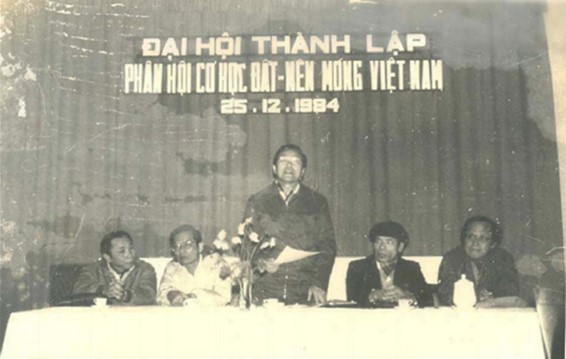
VSSMGE First Congress. The society first president, LE Quy An (center) spoke, with the two vice presidents NGUYEN Thuoc and NGUYEN Ba Ke, the first and second from left to right

At the First Congress, December 25, 1984, the late Prof. Le Quy An, was elected as the first VSSMGE president, with two vice-presidents, Nguyen Thuoc and Nguyen Ba Ke. Introduced by the Swedish Geotechnical Society (SGS), in 1985, the Vietnam Society for Soil Mechanics & Geotechnical Engineering (VSSMGE) became an official member of ISSMGE) with 28 individual members.

VSSMGE 2000

VSSMGE Second Congress (2000).

VSSMGE Second Congress (2000) was held on January 15, 2000 in Hanoi. At this congress, the late Prof. Le Quy An was re-elected as the VSSMGE president, along with Nguyen Ba Ke, vice president, and Nguyen Truong Tien, vice president and general secretary. In 2007, VSSMGE became one of the seven founding members of the Association of Geotechnical Societies in Southeast Asia (AGSSEA): the Southeast Asian Geotechnical Society (SEAGS), Vietnam Society for Soil Mechanics and Geotechnical Engineering (VSSMGE), Hong Kong Geotechnical Society (HKGES), Geotechnical Society of Singapore (GeoSS), Thai Geotechnical Society (TGS), Chinese Taipei Geotechnical Society (CTGS), Indonesian Geotechnical Society (HATTI) and Malaysian Geotechnical Society (MGS). In 2005, the VSSMGE president Le Quy An passed away (1930-2005). The VSSMGE executive committee elected new president Nguyen Truong Tien and general secretary Trinh Minh Thu.

VSSMGE 2010

VSSMGE Third Congress (2010).


VSSMGE Third Congress, 18, June 2010. Society key persons with international guests

VSSMGE Third Congress (2010) was held on June 18, 2010 in Hanoi. At this congress, the late Prof. Nguyen Truong Tien was elected as the president; with vice presidents Le Duc Thang and Phung Duc Long. In October, 2014, the society president Nguyen Truong Tien passed away (1950-2014). Phung Duc Long was elected as the society president, along with the vice presidents: Le Duc Thang, Trinh Minh Thu and Nguyen Anh Dung.

VSSMGE 2016

VSSMGE Fourth Congress (2016).


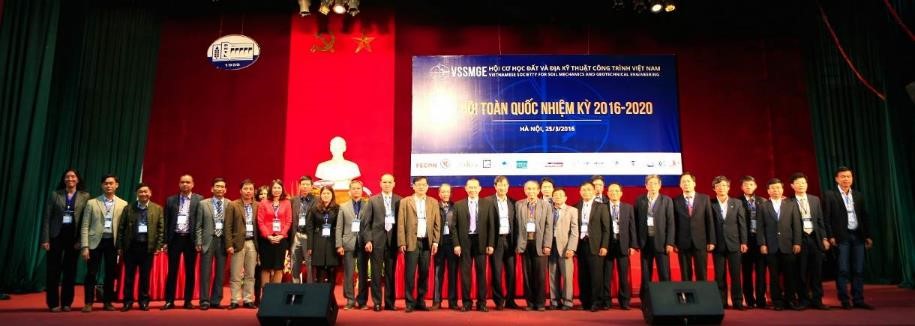
VSSMGE Fourth Congress, 25, March 2016. New ellected VSSMGE executive board.

VSSMGE Fourth Congress (2016) was organised on March 25, 2016 in Hanoi, with the participation of nearly 300 delegates from all over the country. At the Congress, the society president, Phung Duc Long was elected, along with vice presidents: Trinh Minh Thu, Pham Van Long, Nguyen Anh Dung, and Pham Viet Khoa, and general secretary Hoang Viet Hung.

VSSMGE 2023

VSSMGE Fifth Congress (2013).


VSSMGE Fifth Congress, 14, April 2023.

VSSMGE Fifth Congress (2023) was organised on April 14, 2023 in Hanoi. The society president, Phung Duc Long was re-elected, along with vice presidents: Trinh Minh Thu, Nguyen Anh Dung, Tran Thi Thanh and Pham Viet Khoa, and general secretary Hoang Viet Hung.
ACKNOWLEDGMENTS

This Virtual Time Capsule Page was produced by Vietnam Society for Soil Mechanics and Geotechnical Engineering, with contribution by the following experts and organizations. The VSSMGE is grateful for their inputs.

List of contributors
Dr. Duc-Long Phung, Thuyloi University
Dr. ABC, ABC University


© 2023 Vietnam Society for Soil Mechanics and Geotechnical Engineering